Birth in Brittany
Jean Le Jollec was born in Lothey-Landremel, in Finistère.
Eudist missionary · North Shore · 1883–1913
At thirty years old, Jean Le Jollec had already crossed the Atlantic, joined the Bersimis mission and shared his daily life in lively letters.
Born in Brittany in 1883, he joined the Eudists in 1908 and became a priest in 1910. Sent to Canada the same year, he discovered an immense region, the northern winter and the links forged throughout the missions. His letters make his voice heard even in the most ordinary details.
Explore his story ↓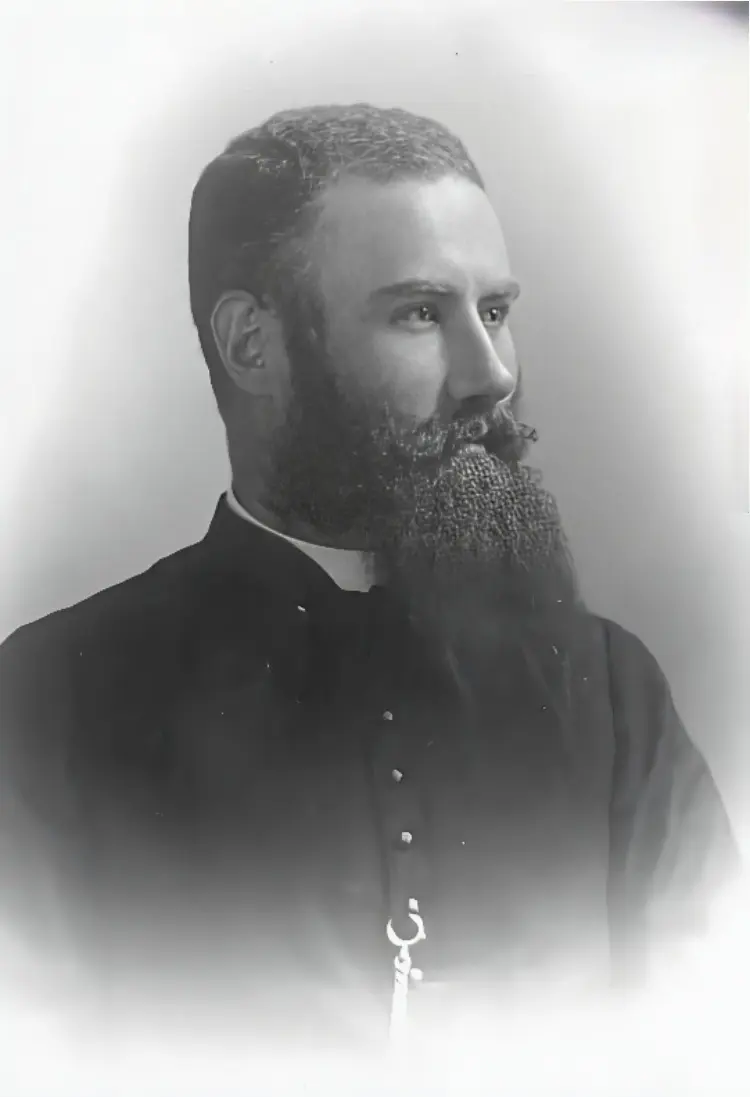
Biographical landmarks
A few dates shed light on the journey of Jean Le Jollec and situate the letters collected here.
Jean Le Jollec was born in Lothey-Landremel, in Finistère.
He began his training in the Congregation of Jesus and Mary.
Ordained a priest, he was soon sent to Canada.
He joins the mission on the North Shore and discovers a territory where travel and the seasons give rhythm to life.
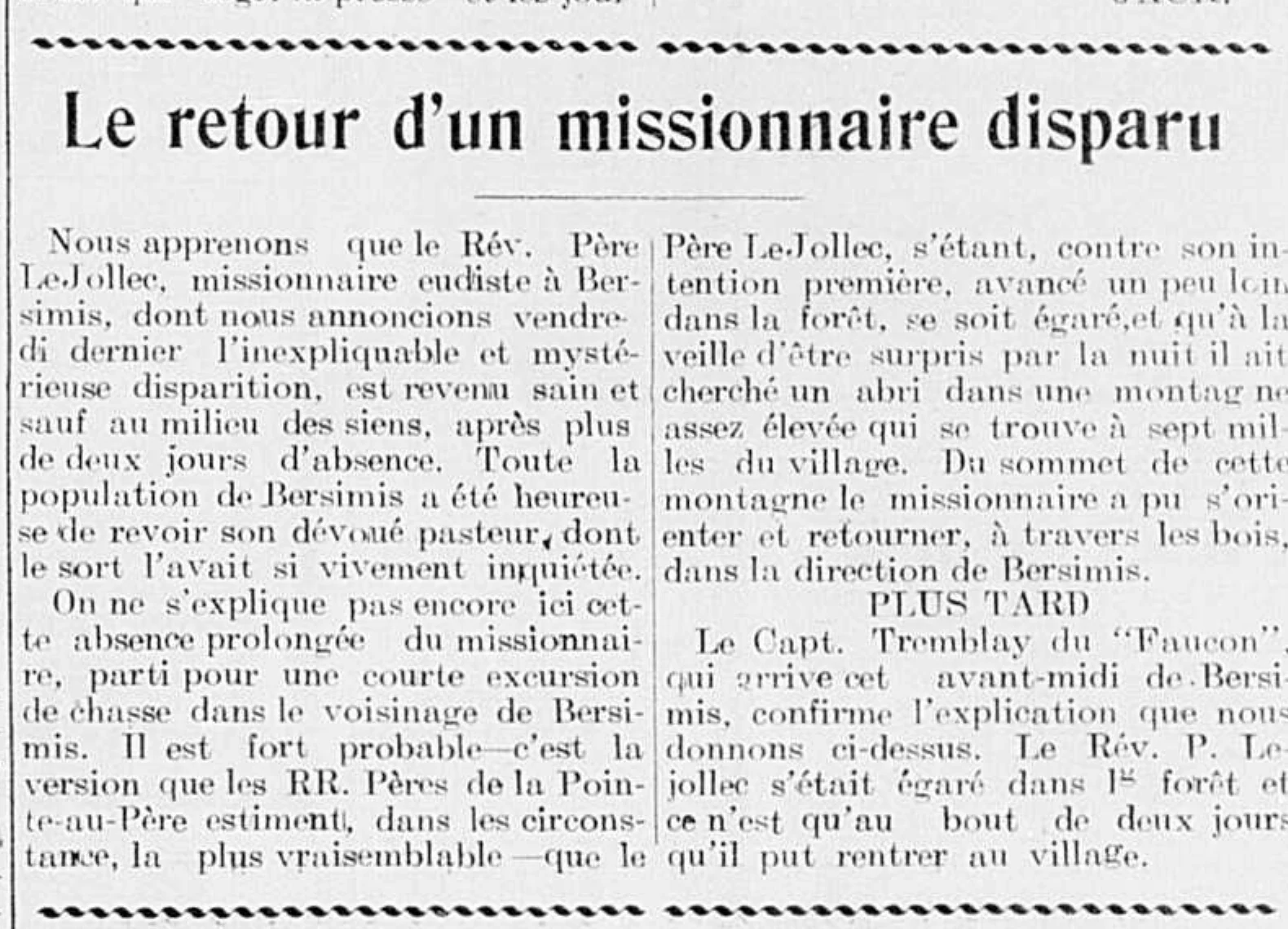
After staying in the woods, he does not return at the expected time. The news spread in the region before we learned that he had been found safe.
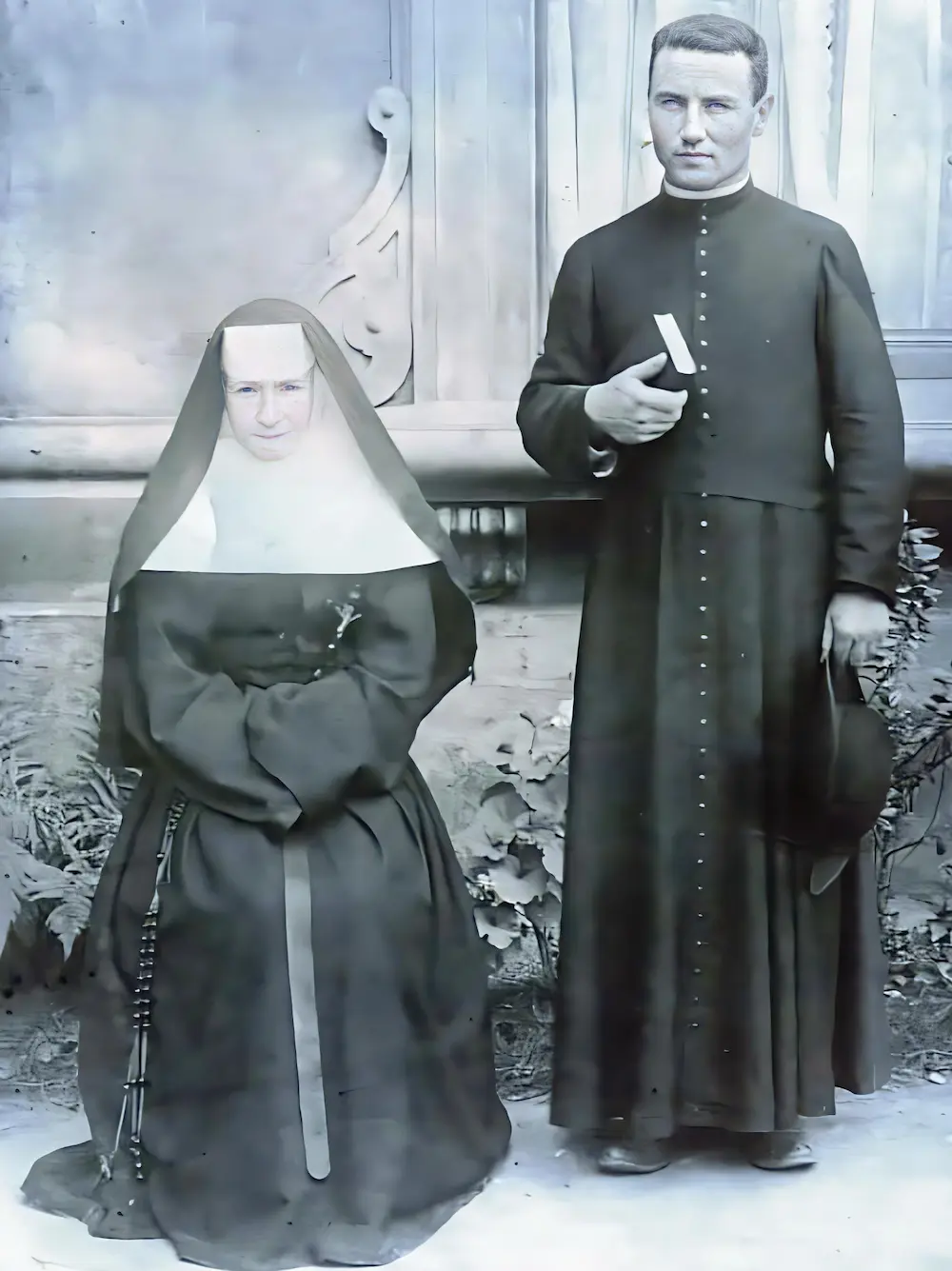
My dear dad, my dear mom,
Let me tell you what I have been doing since the 17th. After a night’s rest, I am getting ready to leave.
Farewell to the country's seminarians and teachers. At 11 a.m., the “Bretonne” weighs anchor and we are separated from the land of France. The sea is rough, the boat is rolling.
I met a priest from St-Brieux who was going to Plymouth to study English. As evening approaches, the sea grows rougher. There's the Eddystone lighthouse, the lights of Plymouth, we're approaching. Mother Claude (Marie-Anne Le Jollec) is at the dock with Mother Ste Ursule. We drive to Beconfield.
Jean
Photo: Eudist Archives, Marie-Anne and Jean Le Jollec
October 20–31, 1910 · The trip
Jean recounts his departure by train, the crossing of the Atlantic and his arrival on the North Shore. The eight markers below follow exactly the chronology of his story.
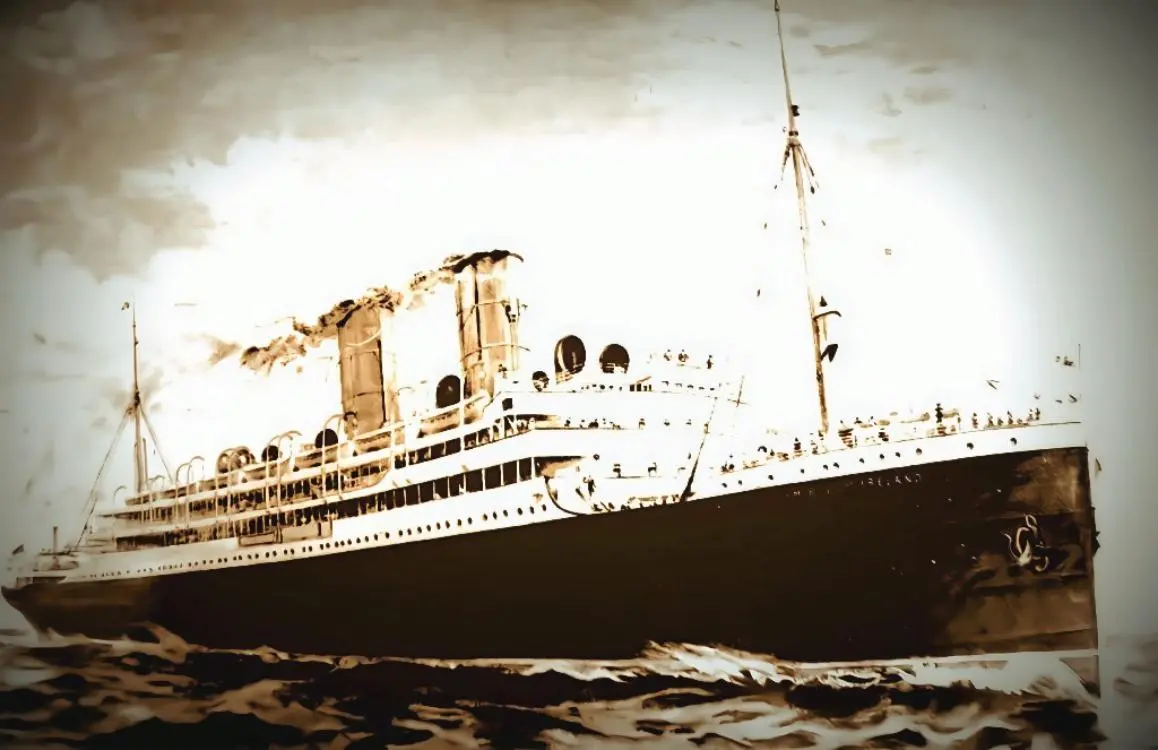
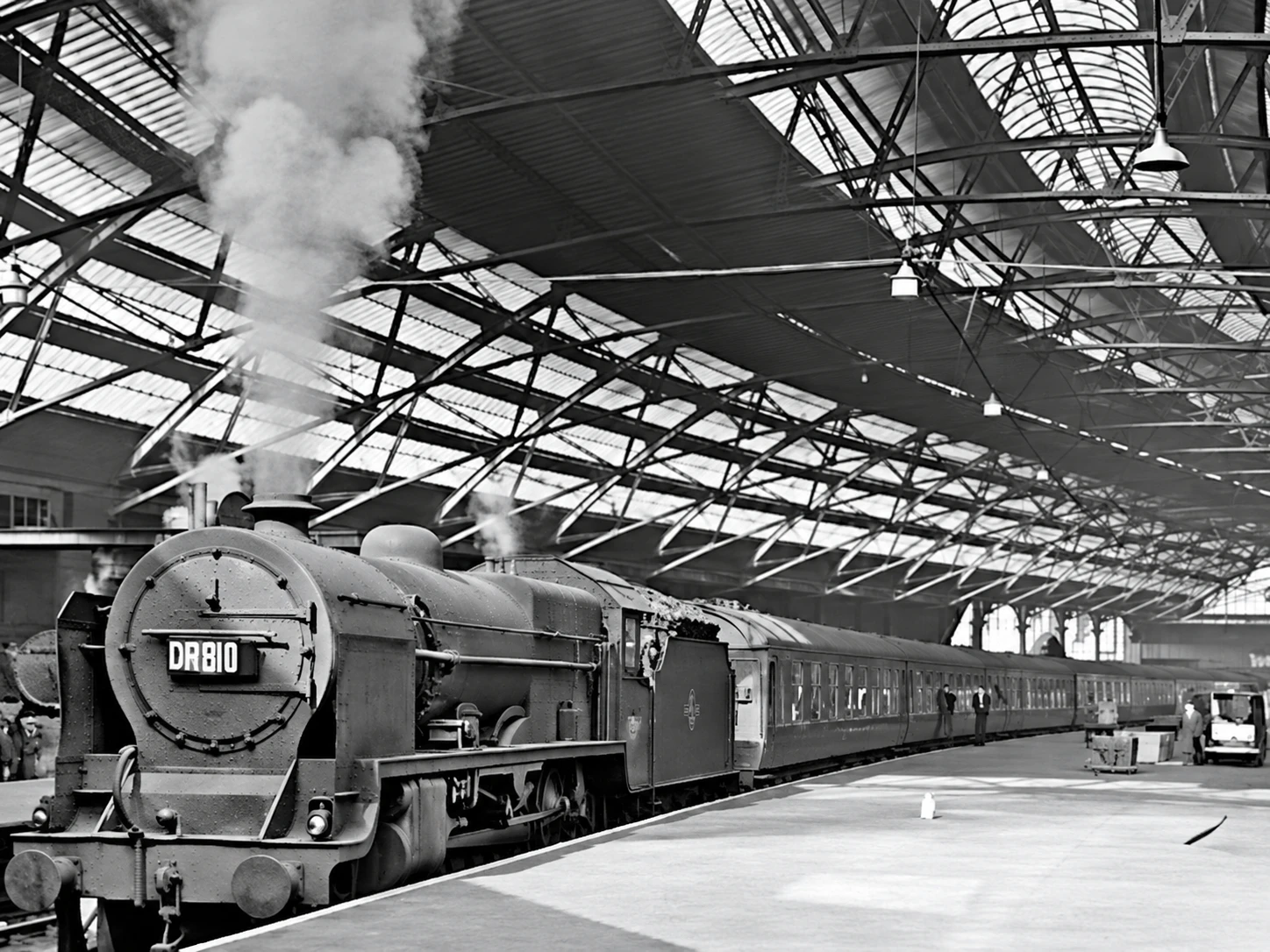
After supper, Jean is taken to the station. The train leaves at 8 p.m.; the next day, after a change and a wait in the cold, he arrived in Liverpool and found Father Brézel.
Photo: Wikipedia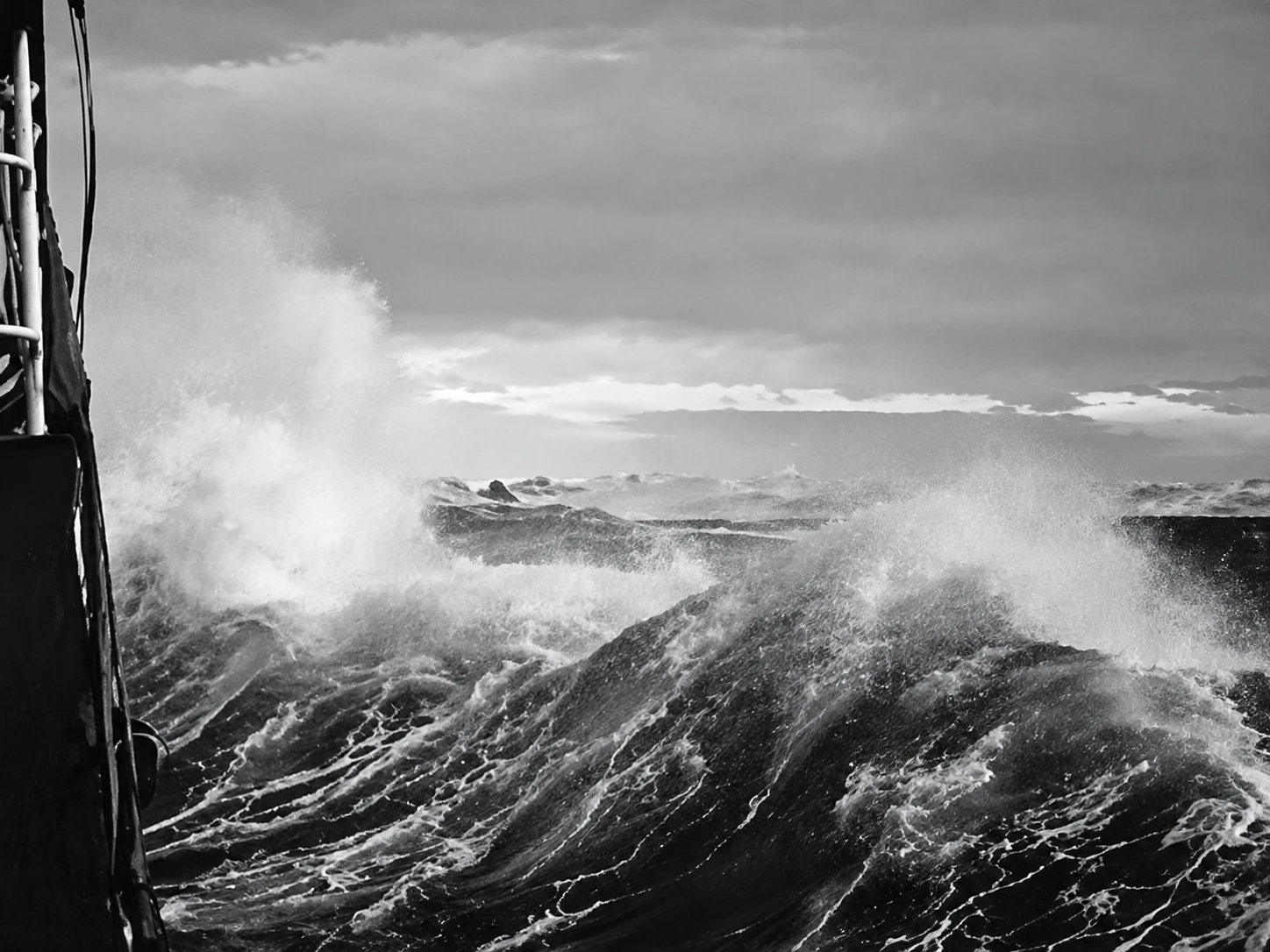
The coast is still visible. The sea is beautiful and calm; on board, Jean walks with Father Brézel. The night then becomes restless.
Photo: Pixhilt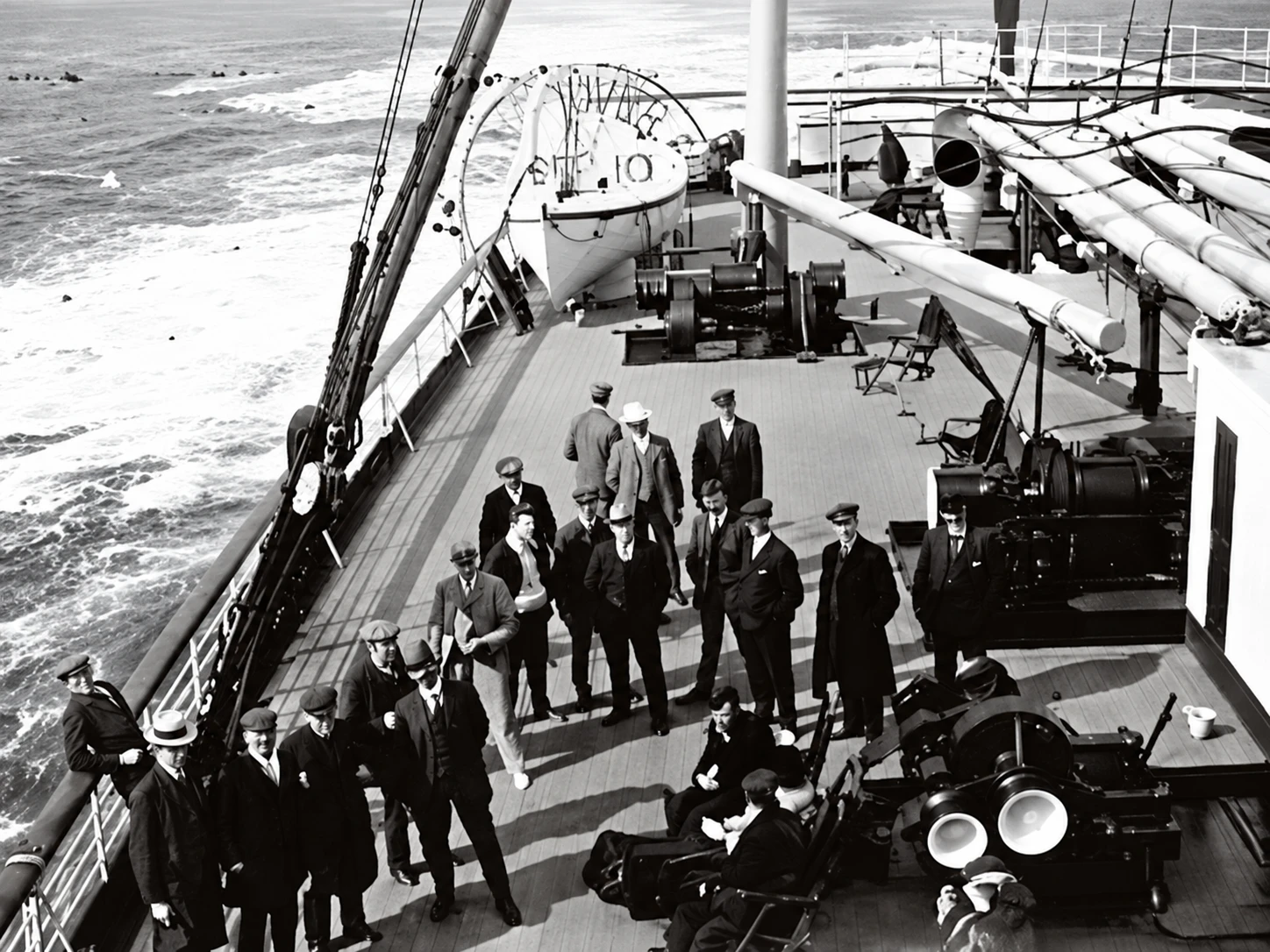
The sea is furious and the boat is rolling. Jean travels with Father Brézel; wireless telegraphy continually communicates with the coast and ships at sea.
Photo: Wikipedia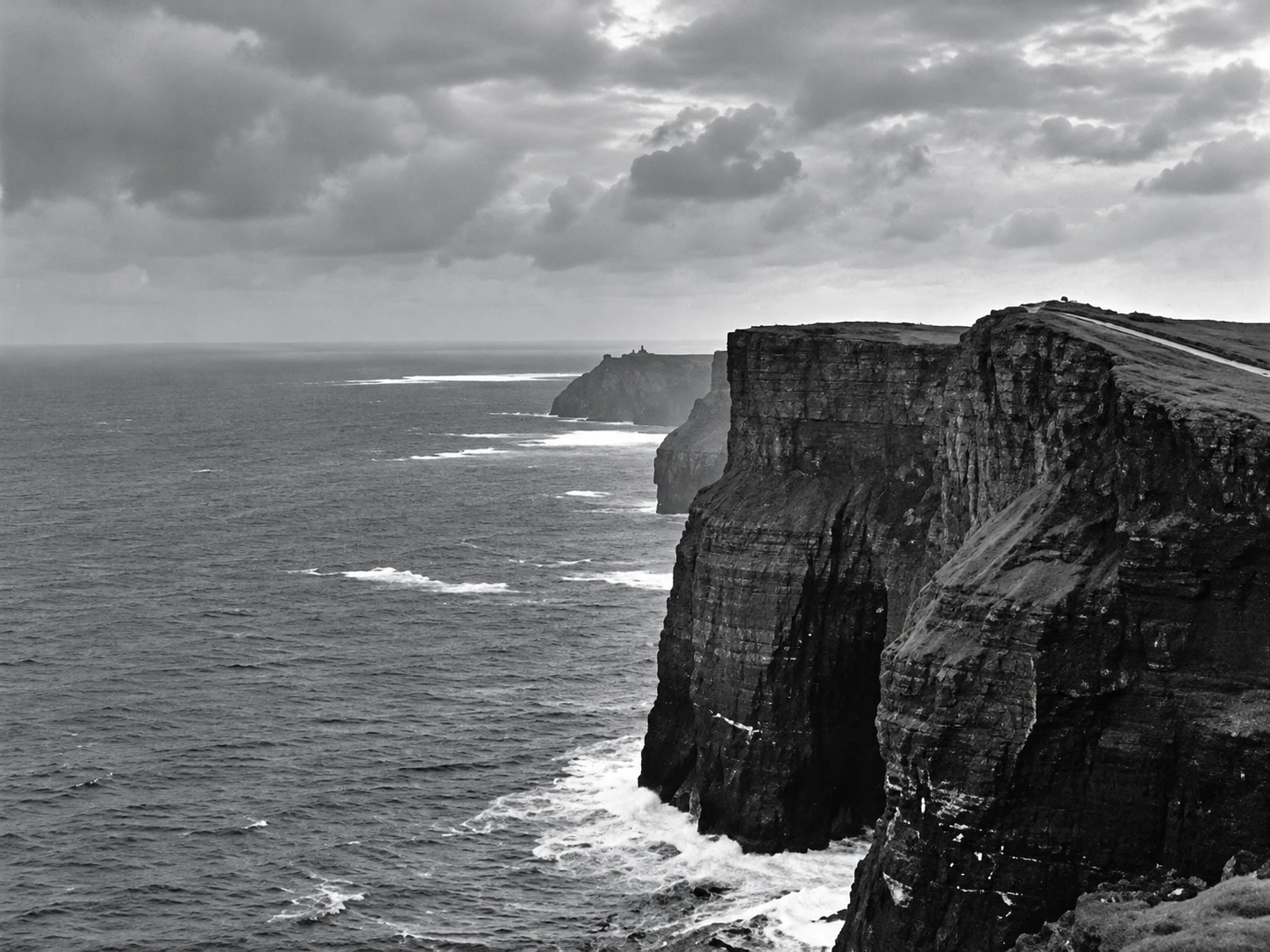
The liner heads north to avoid opposing currents. The storm rocks the ship and Father Brézel remains very distressed.
Photo: Unsplash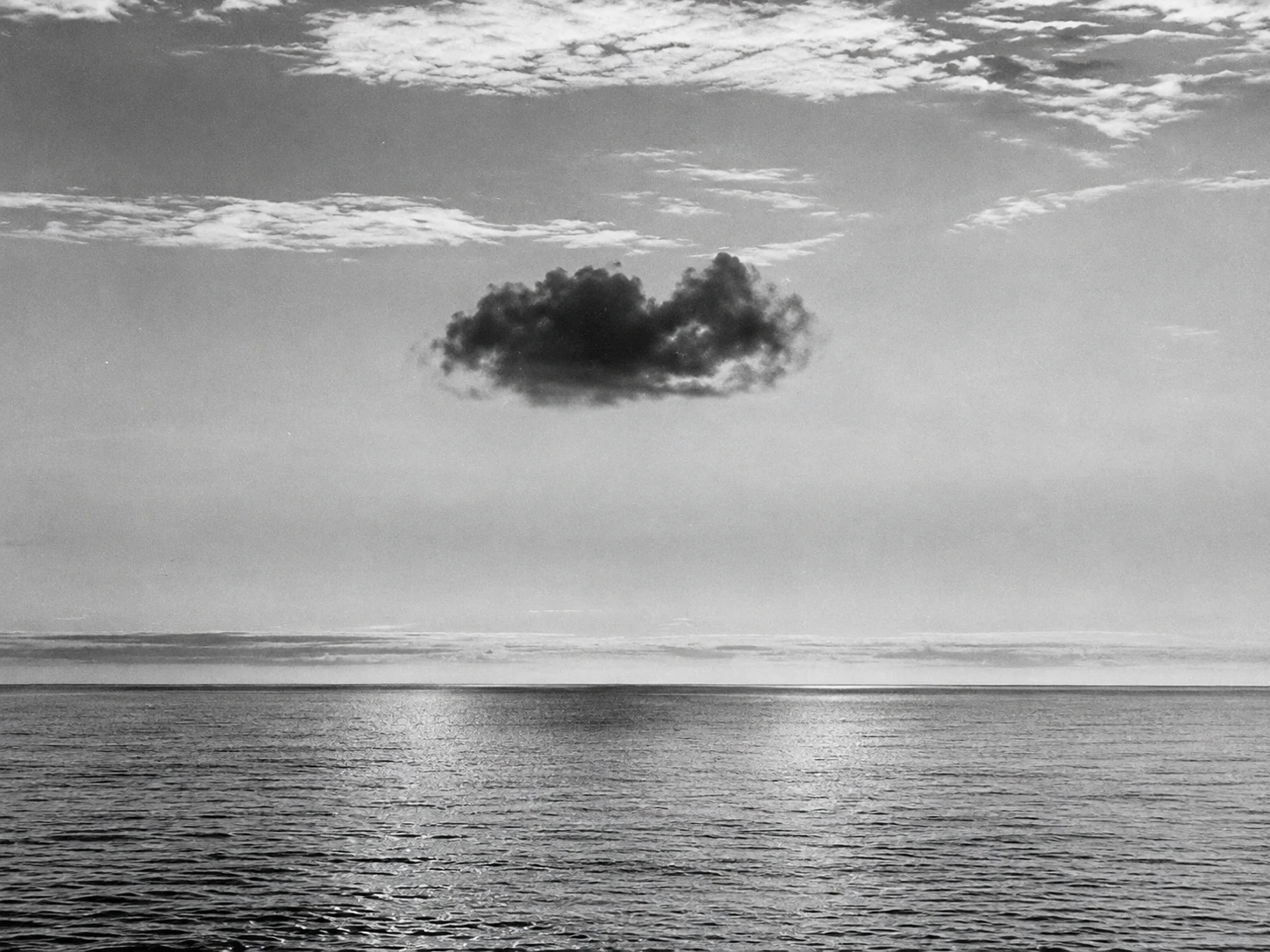
The proximity of the land is felt. Jean hopes to be on land the next day, with the bishop of Rimouski.
Photo: Unsplash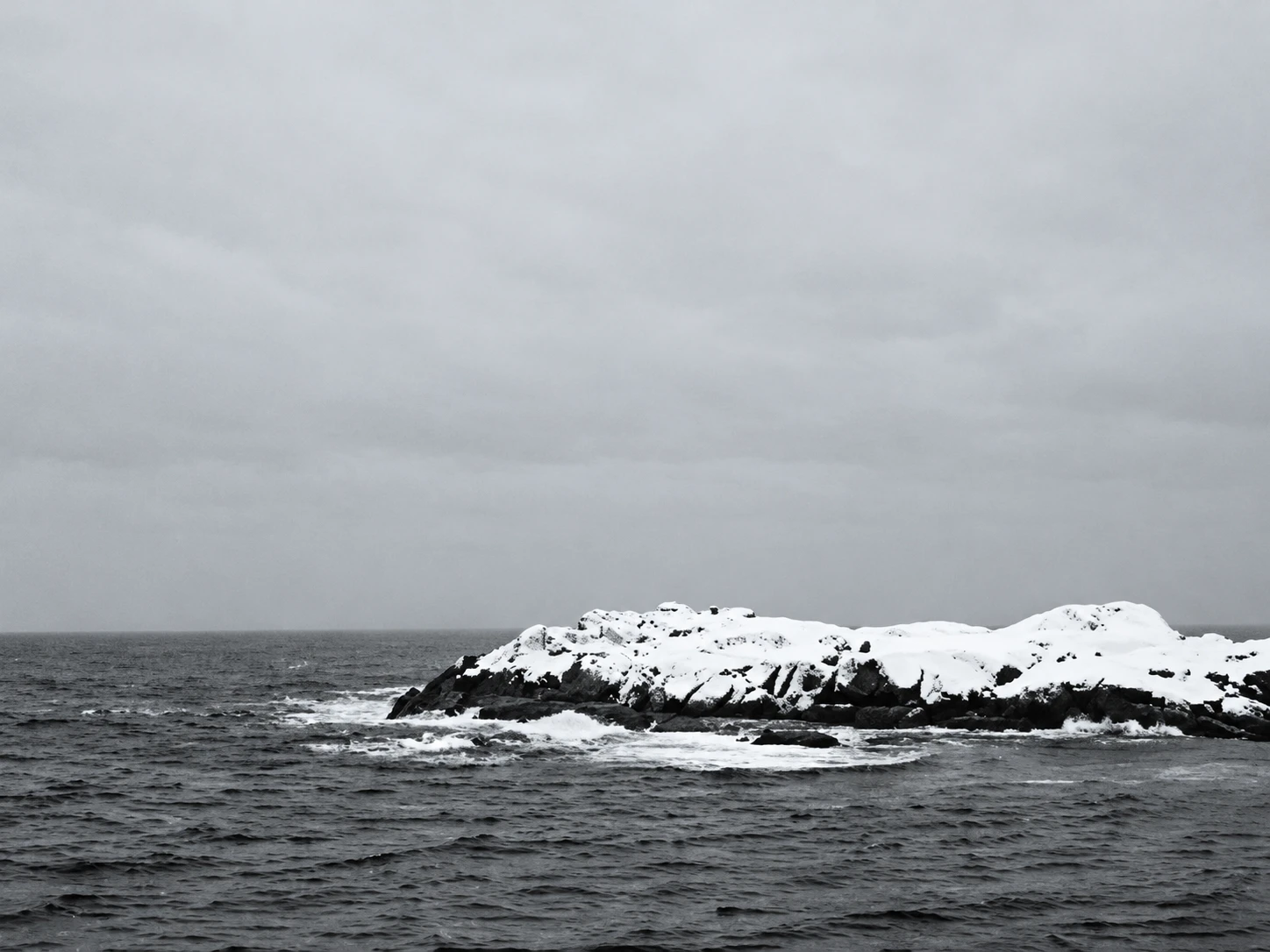
The coast stretches as far as the eye can see, white in places under the snow. Jean writes that they will be on land in a few hours.
Photo: Unsplash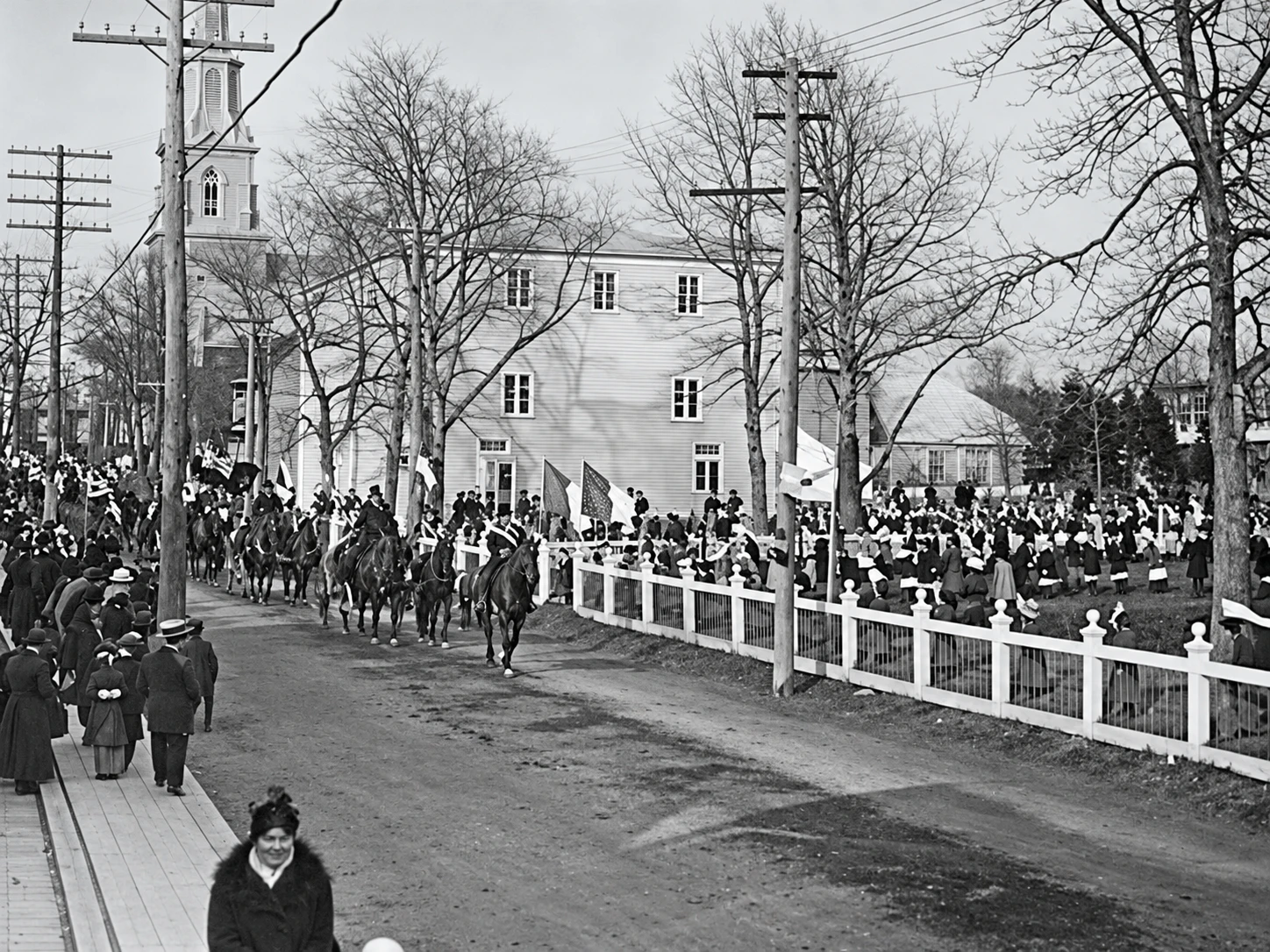
The ship cannot dock in Rimouski due to lack of depth. Jean goes down in a canoe; after a few days, he sets sail again towards Bersimis.
Photo: BANQ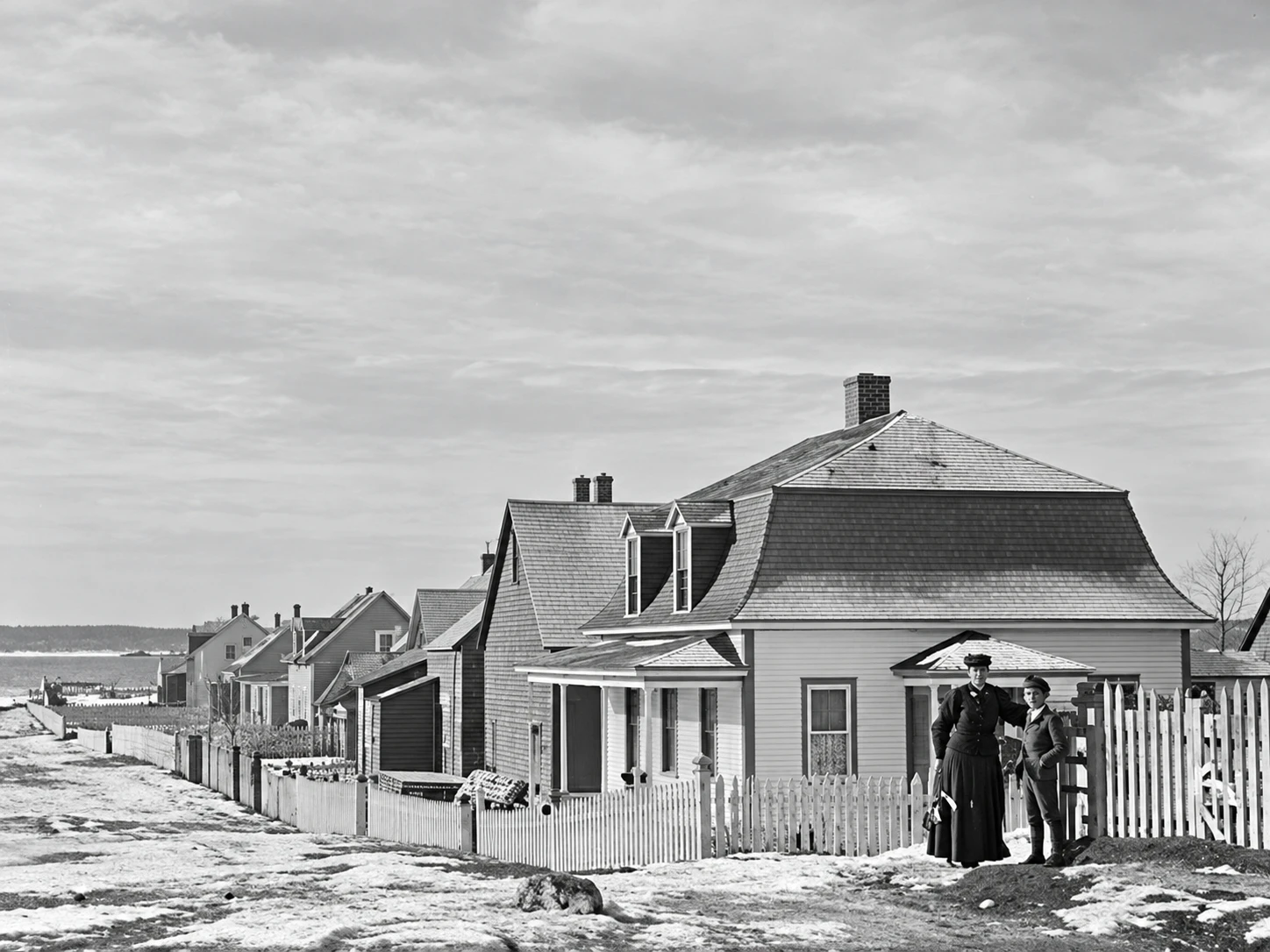
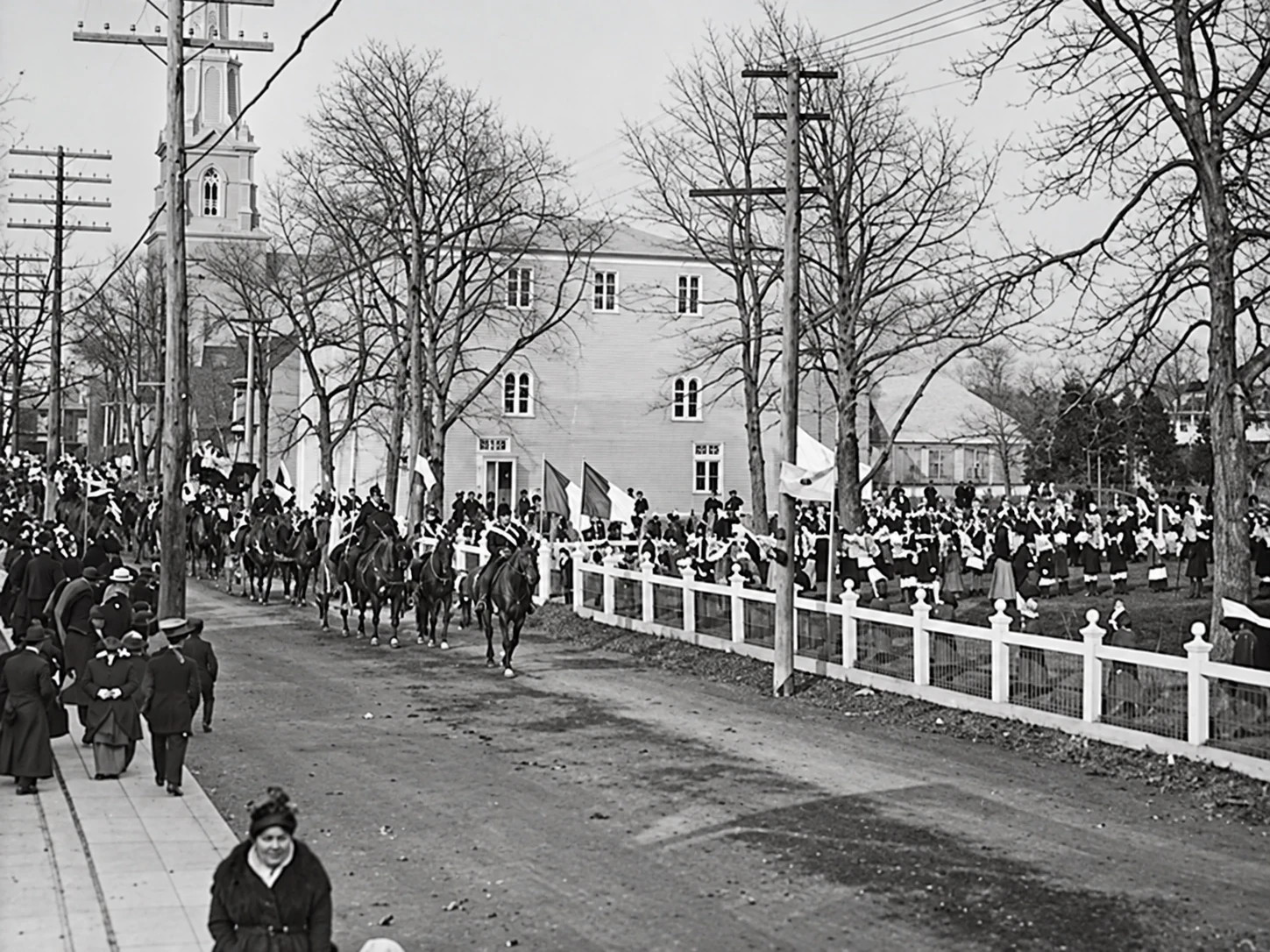
Jean discovers the village and its wooden houses. He begins to describe the mission and living conditions of the community.
Photo: Father Le JollecThe mission · 1910–1913
In his letters, Jean recounts snowshoe trips, meetings, hunting and small episodes of everyday life. These historical texts also reflect the vocabulary and views of their time.
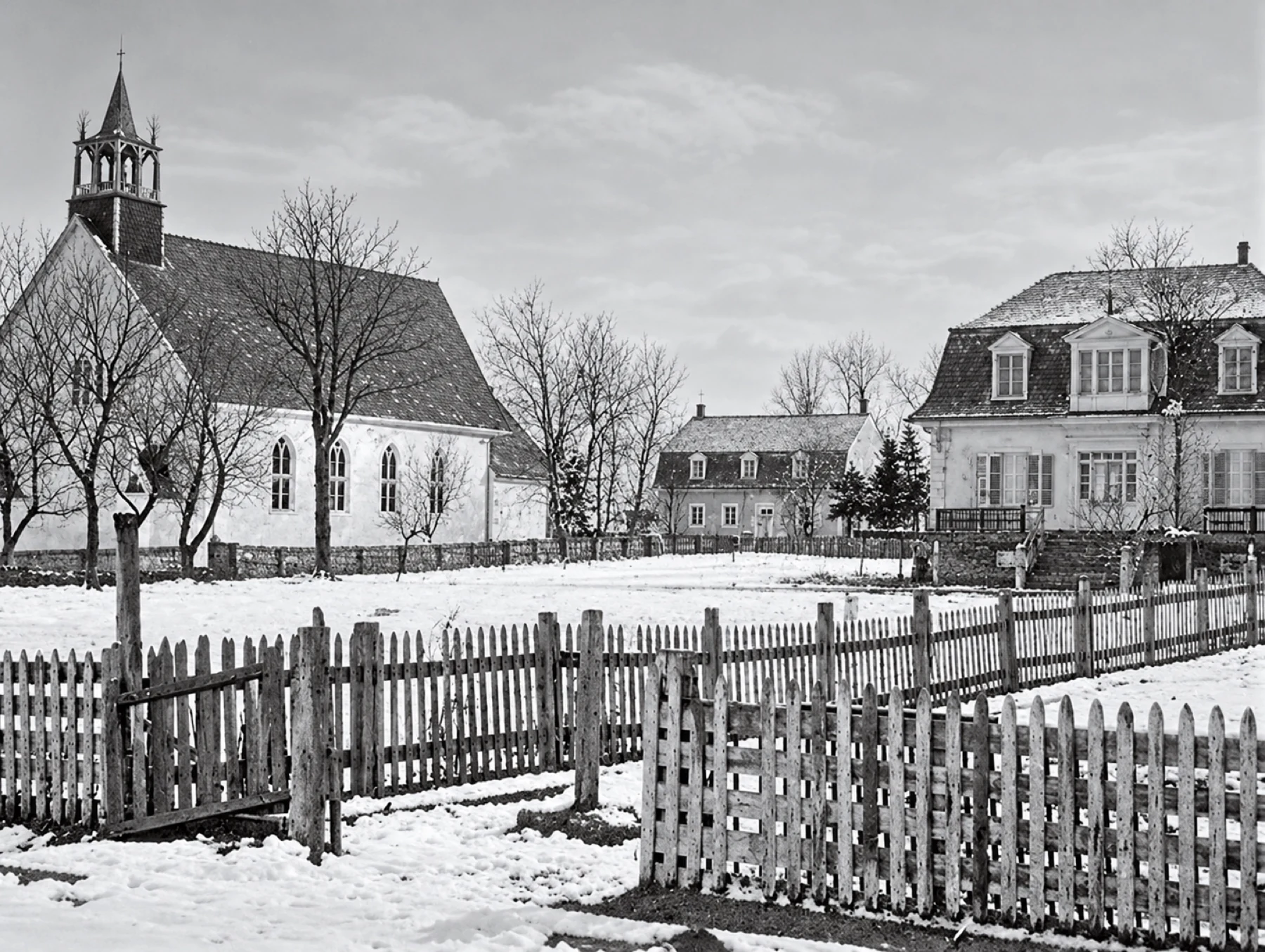
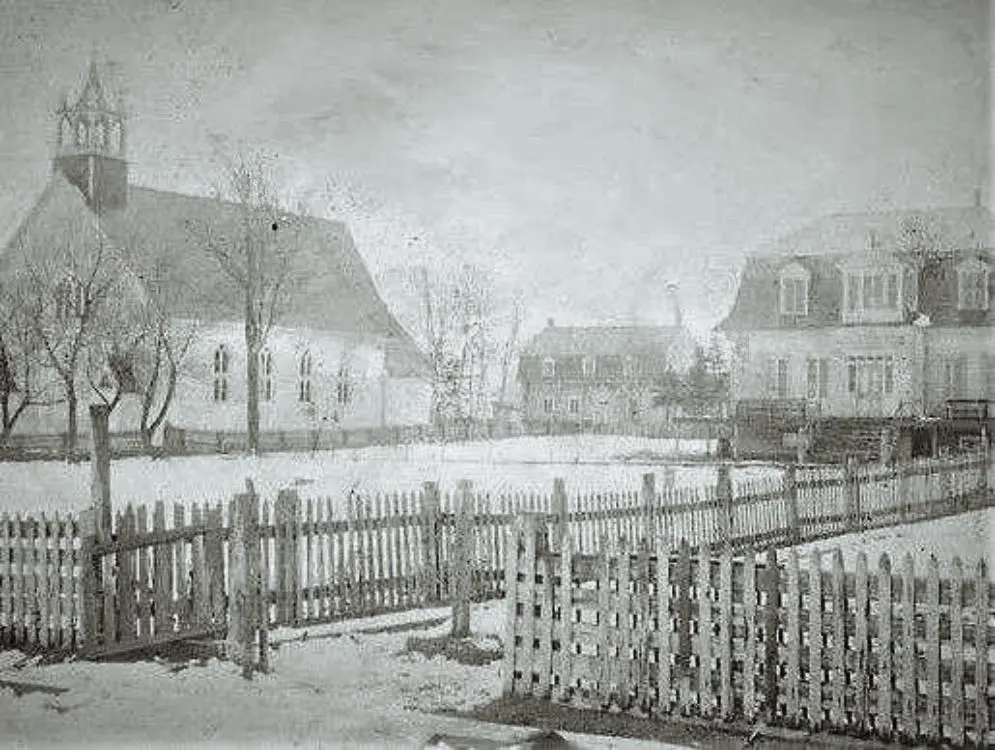
The four letters below follow the supplied transcriptions. Each entry gives the passage in full, with its salutation and signature.
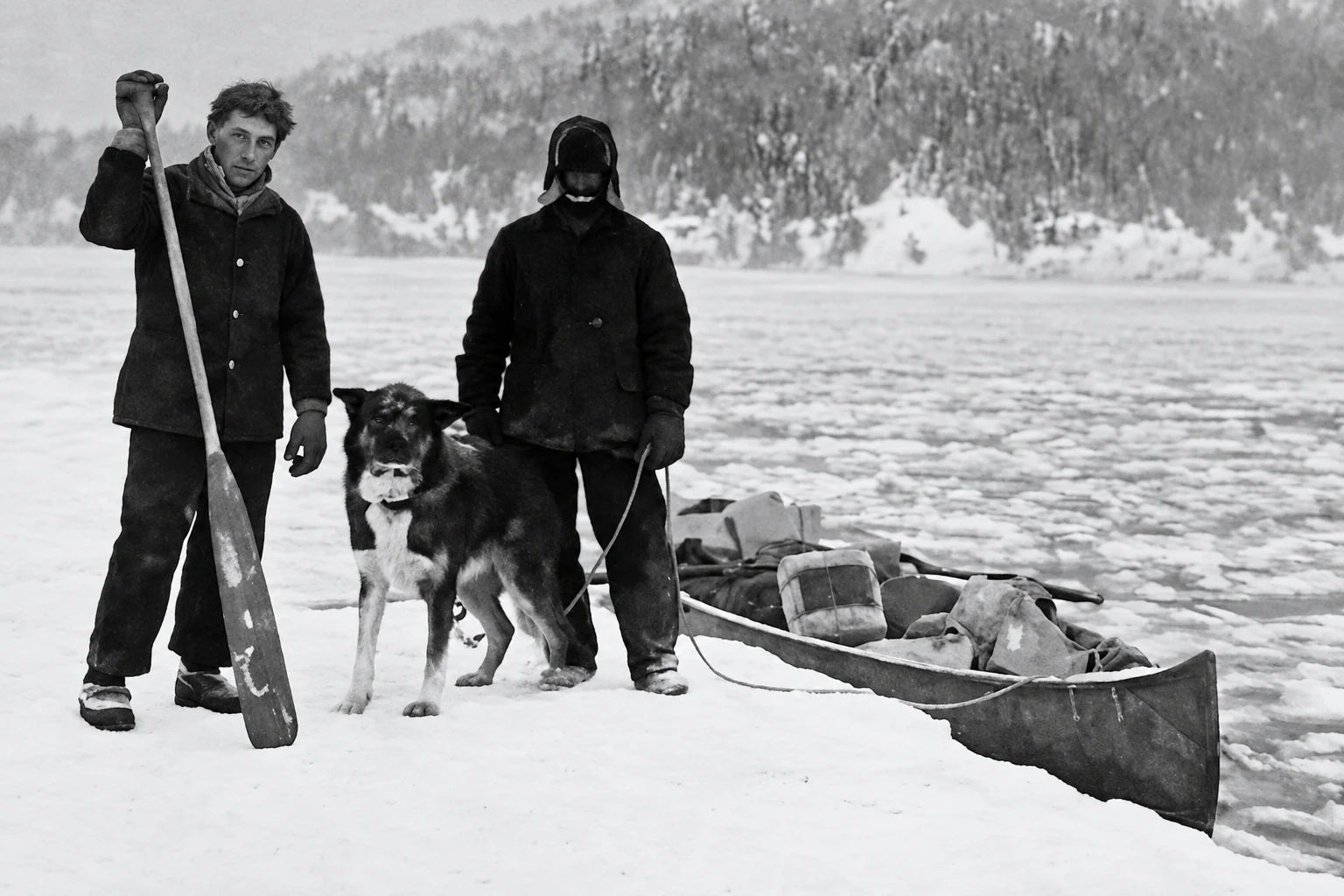
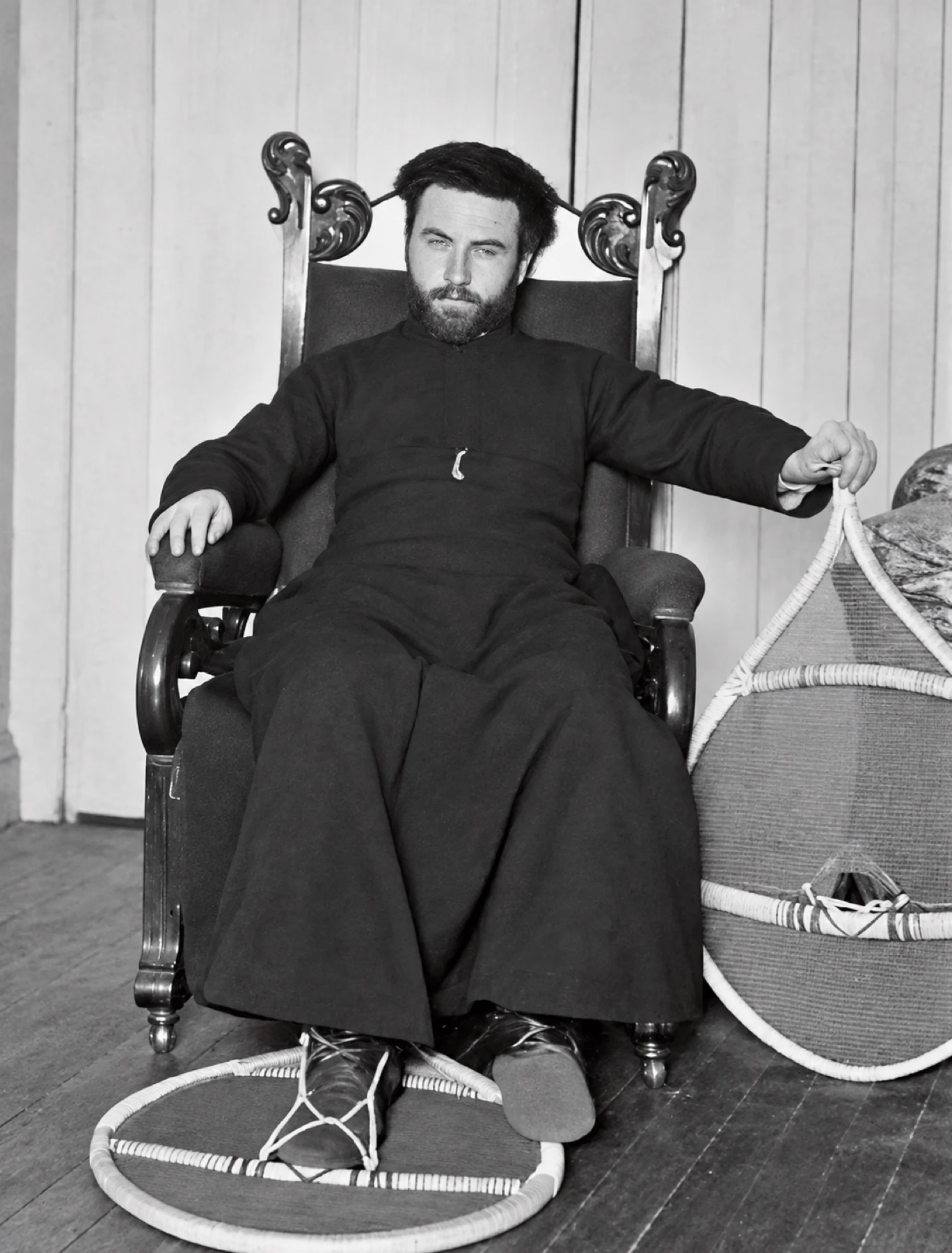
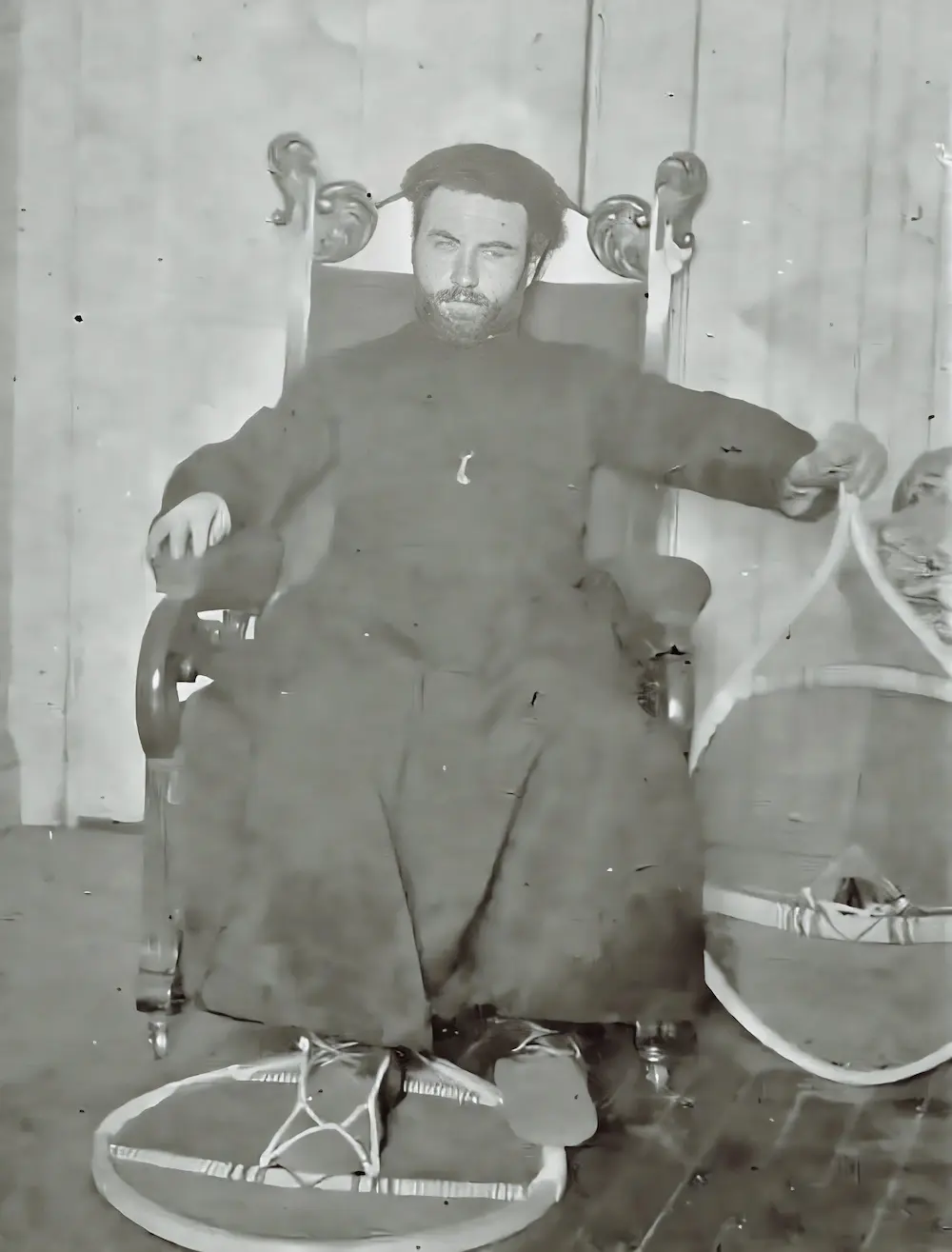
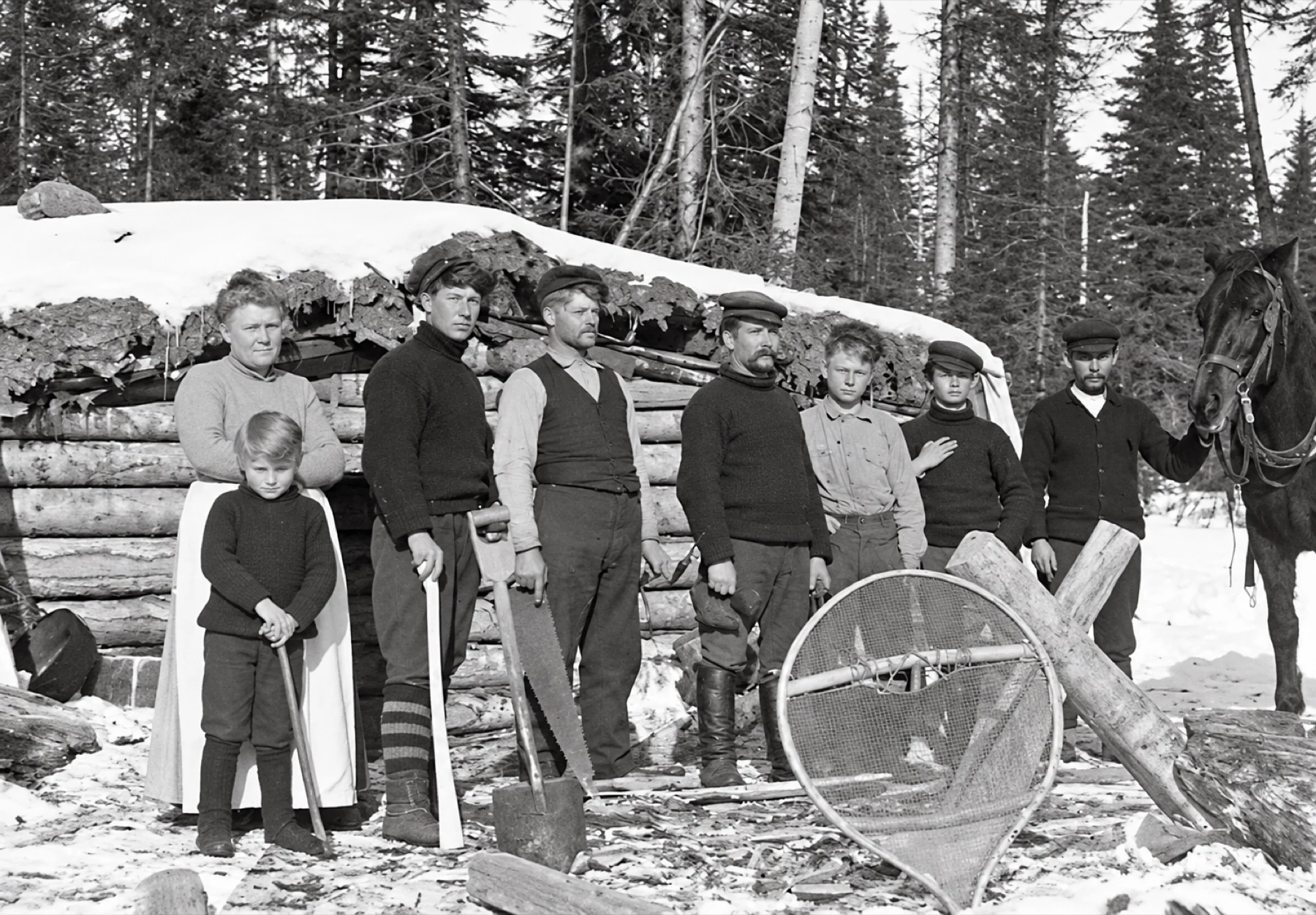
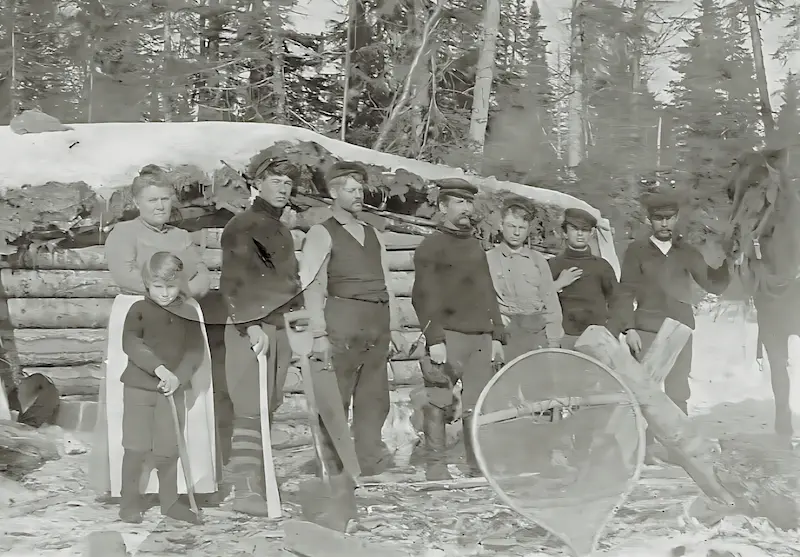
Archival photographs accompany the story. When the identity of the people depicted is not established, the caption simply describes what the image shows.
Read Jean's letters ↓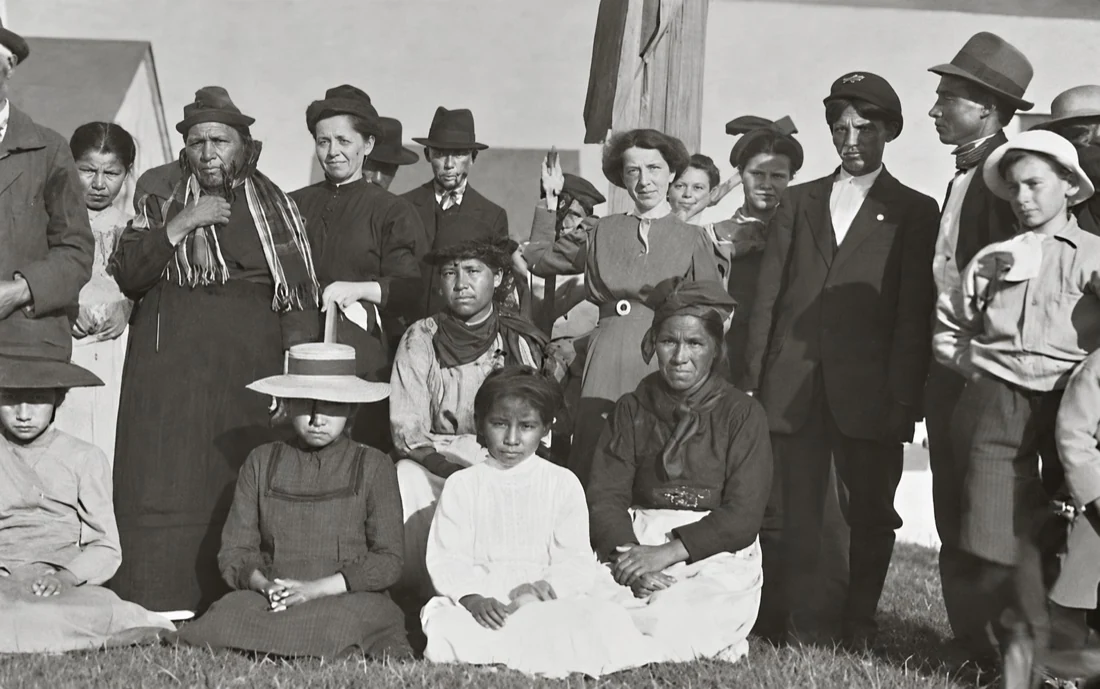
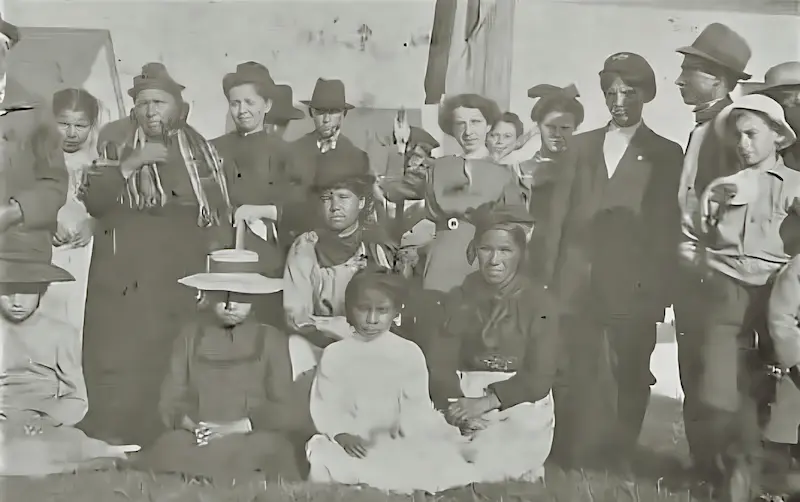
Correspondence · 1910–1913
Open a letter to read the full transcript. These English translations follow the wording and meaning of the French transcriptions.
My dear Marie, my dear Joseph,
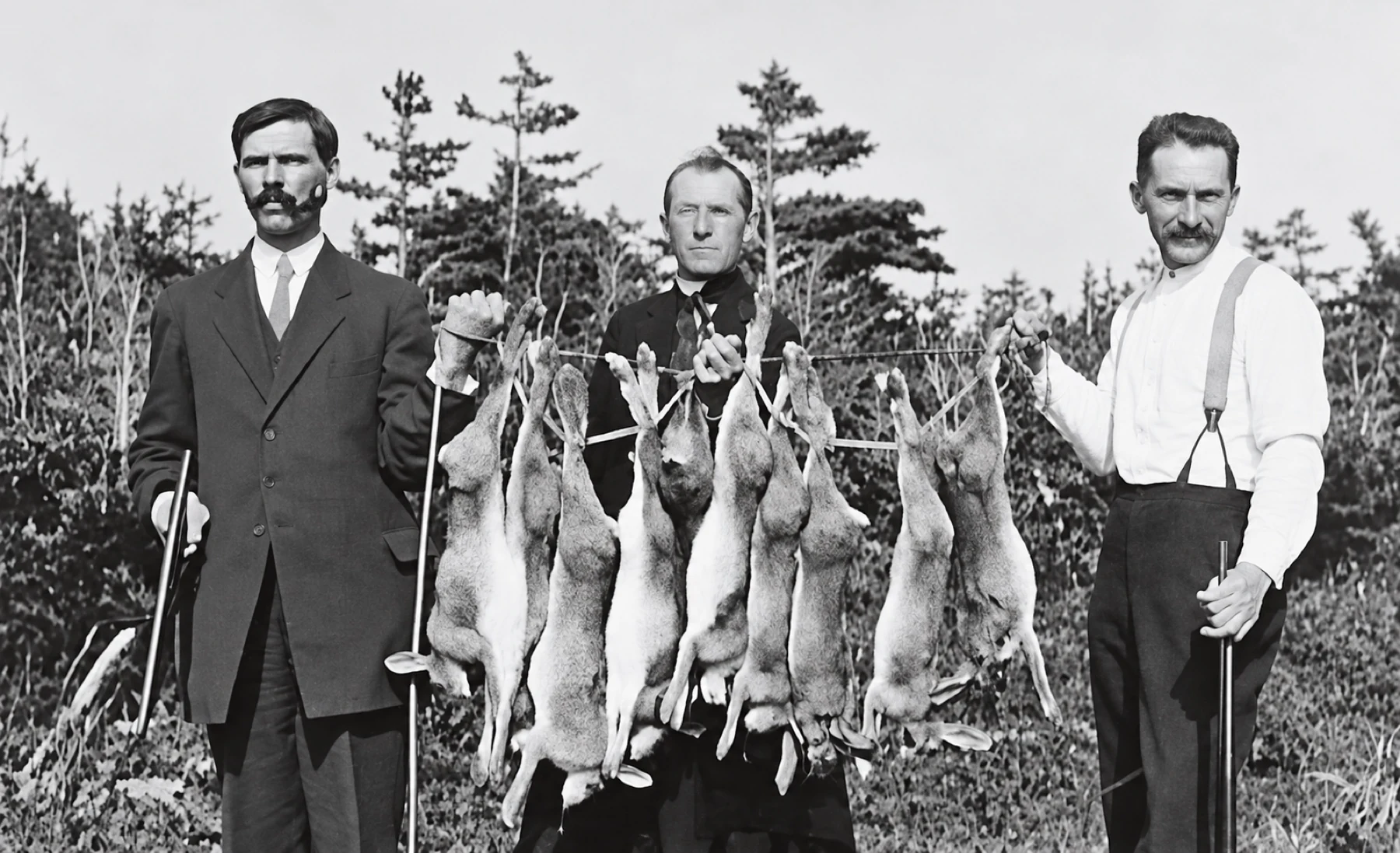
A word about hunting, if you like. I have fired only five shots so far... The white partridges arrived only five days ago. You have to keep your eyes peeled to spot them in the snow. Once you have seen them, you have them, especially at feeding time. The best time is in the morning before sunrise. First, I must tell you that these partridges do not resemble their cousins in France. They are white from head to foot, with just two or three black feathers under the tail, visible only in flight. Their feathered feet are adapted to the snow. They feed on willow buds. In some regions they kill off these shrubs, so they do not return to the same place every year, lest they starve. There they are, busy with breakfast. You approach without a dog, of course, cock your gun, aim, and shoot the nearest one. Do not imagine that its neighbours have flown off crying: they simply go on with breakfast, untroubled by the bereavement that has just struck their family. You keep shooting as long as there are partridges. If you arrive early, not one will escape. At the end, you gather up your victims and go home, unless you want to continue. The [Innu] shoot any number of them.
Yesterday I killed my first two. They were feeding in our clearing in the woods. It was seven in the morning, just before sunrise. Two [Innu] were already shooting at the flock when I saw the first bird. But their guns are a hundred years old: they have to be loaded through the muzzle before they fire. I had time to shoot while they were reloading. The first bird stayed where it fell, its beak in the snow. I moved forward and lined up two birds for one shot. Alas! I had chosen the wrong cartridge, one meant for larks, and white partridges are very hard to kill. Both birds fled into the woods and I went after them, vowing never again to carry fine-shot cartridges good only at point-blank range. I searched with my eyes rather than my nose and finally saw one flying. Looking again, I spotted it in the snow, stretching its neck. I fired between the fir trees. It struggled, died, and I carried it away. Enough for this time: I went home. Marguerite, [the Innu woman] who keeps house for us so well, asked whether she should ring the bell to announce my feat to the world. I thanked her for her kind thought and asked her to be patient. At noon, we were served roast partridge.
Among the white game, I have also eaten hare. You would think you were eating fir branches: it smells strong and is lean. Instead of cabbage, clover, and carrots, the hares here know only the spruce used to make paper pulp—pulpwood. As for dark game, at Father Brézel’s we had ‘cacaoui’—pardon the word—a kind of duck. Hundreds pass right under our noses every day. But it is not delicious: it feeds on fish and smells of oil. Later, we shall try for wild geese and Canada geese. They are large and tasty. This summer, if I am not away on a mission, I plan to fish for salmon and trout. While crossing to Father Brézel’s, I saw a sea-wolf, in other words a seal, which always stays opposite us. Have I told you the price of furs? A black fox sells for as much as 1,000 piastres, or 5,000 francs; a yellow one for nine or ten piastres, or 45 or 50 francs. A little mink, no bigger than a small rat, fetches as much. The postmaster’s father has already caught 35 foxes this winter, including two black ones, I think. They are the rarest. One woman caught as many as 1,400 white partridges in a single season. In twenty minutes, allowing time to reload, the postmaster shot all seventeen white partridges perched in one tree.
Jean
My dear parents,
Time passes, and soon we shall take possession of the buildings at Bersimis. I say “buildings” because the rest disappears as if by magic, contrary to our agreements. But, having received the order not to say anything, we let it happen, while inwardly protesting against this disregard for the agreements. Soon then, the sooner the better, the time will come when we will have to cover our maintenance costs, to provide our cook with vegetables and meat for our frugal meal. I will most likely be in charge of the vegetable garden. Seeds are lacking and that is why I would ask you to be kind enough to send me any spare seeds you have, of every kind: cabbage, carrots, onions, leeks, lettuce, chicory, watercress, fine herbs, turnips, radishes, etc...
The weather is still just as fine and cold. A few days ago, however, we had a terrible storm. Back home we have no idea of such violence. The wind blew with incredible force; many [Innu] spent the night outside their houses, believing the end of the world had come. As for Father Brézel, he got frostbite—guess where? I had better tell you straight away; you would never guess. His tongue! Returning from a mission along the coast, he was running after his sled. Tired from running in the snow, he must have imitated the dogs by sticking out his tongue. It did him no good: when he drew it back in, it was frostbitten.
Last Sunday we set out early across the bay to celebrate our patronal feast of the Holy Heart of Mary at Father Brézel’s. Father Petel sang Mass and your humble servant preached. Our task accomplished, Father Brézel, whose tongue is almost healed, treated us well. You may like to know the menu. On that day, our Constitutions say, the community is to be served a special dish. Father Eudes shared Saint Francis de Sales’ view that religious feasts should bring a little rejoicing for the body too. Brézel, faithfully observing the Constitutions, served us tomato soup, followed by a stew of white hare. The roast was a chicken that had spent no fewer than five hours on the fire—so young was the dear hen! For dessert, a chocolate cream without eggs and a Savoy sponge cake. That tells you it was not first-rate pastry. Still, we had the illusion of celebrating, and illusion is the happiness of the poor. We stayed until Benediction, held at four after the Rosary and evening prayer; on ordinary days, the parishioners gather at the presbytery to pray together. We were kept for supper and given a reviving rum toddy, which did us a world of good when, five minutes later, we crossed the bay on snowshoes in the moonlight. You can see what snowshoes are by looking closely at the enclosed photograph. Without them, it is absolutely impossible to walk off the beaten paths. Yesterday we tried to visit a tent on the edge of the woods, five minutes from here. The path was not packed down. I had to go on all fours to avoid sinking up to my elbows; Father Petel had to lie on his back to free himself. There was at least a metre and a half of snow.
Jean
Bersimis,
Very dear brother and sister.
It was Thursday noon that he left us, promising to return perhaps the next evening, at least the following week. But alas! Less than half an hour after he had left our door, someone came to tell us: Father Brézel had fallen into the water. The river was frozen over, but the ice was not yet solid, and then it was the high tide which had broken the ice in more than one place. At the end of a 10 meter run, I saw Father's sleigh on the ice, a dog in front, a dog behind, but no Father. The dogs were lying down. But it was still far from us, at least 600 meters. Those who had not seen the Father pass said that he was hanging on to the back of the sled, but for me there was only a dog behind the sled. Two intrepid men managed, after half an hour, to reach the sled by dragging their canoe on the ice, because they could not risk running on it as on dry land. Father Brézel had fallen through there. Others could suffer the same fate. [Read more]
Jean
Imagine their amazement on seeing, in front of the sled, a hole in the ice into which Father had fallen. On the edge there were a pair of snowshoes and a mitten and in the hole another mitten. There was no trace of Father. The current had carried him away. We have looked for him since but in vain. He was 43 years old and serving a mission more than 30 leagues long. His death leaves the mission in our care until next spring. He was originally from Fougères where he still has his father and mother. He planned to return in 4 or 5 years for their golden wedding anniversary and his silver jubilee as a priest. The good Lord has arranged it otherwise. He was a holy priest, of limitless charity and devotion to his faithful.
My dear Jenny,
I celebrated the anniversary of Dad's death the day before in order to say mass. The doctor offered to take me out in a motorboat for a hunting trip. When the time came, we couldn't leave. Tired of waiting and eager to offer myself an excellent distraction, one day when the harvest was too wet to be brought in, I left for the woods. It was 8 o'clock. I walked like this with my two dogs, which were scenting partridges, I caught 4 of them. Urged on by the hunt, the soft grass, and some devil too, I headed deep into the woods. My dogs get lost or rather linger in pursuit of game. I walk alone and tired of running and jumping, I decide to sleep there. I had matches, partridges and an appetite; in 5 minutes the partridge is plucked, gutted, put on a spit at the end of a string.
There it is, browning and sizzling; it is cooked. I hang it on the tree while I prepare the bedroom. That’s done; let’s eat. It’s 5 p.m. and dark. My dogs came back hungry, they devoured the tripe, I tasted the rest. Then my prayer done, a good fire in the room, I go to bed. But now the bells ring, the siren of a large ship screams to shake everything. I feel it, it’s all this fuss for me. You can whistle, old man, for me I'm not moving anymore. The night passes and my desire to run begins again. It’s 5:15 in the morning. I go back through the woods. At 9:30 a.m. I was in Bersimis to calm the nerves and silence the rumors. Nevertheless, the newspaper Progrès du Golfe in Rimouski still finds a way to write about me. Bishop Blanche heard the news and immediately telegraphed.
The Fathers in Chicoutimi are doing the same, and it is not over yet. I am going to become famous thanks to my rifle. Today I hunted caribou—or rather cattle. I shot at their feet to teach them not to eat the parish priest’s oats. Another thing: a Father about to return from a holiday in Morbihan is bringing a nephew whom he offers us as a domestic servant. We have accepted. The cook has been engaged for the spring. And, better still, Mr. Goudreault will find himself caught when he thought he was doing the catching. A good crop of oats, properly ripened. The barley has been brought in for a fortnight. The potatoes we are beginning to dig are good and enormous. It is a year of abundance. But I am up to my ears in work: the Irishman is ill.
My fondest regards to Louis, Mother, and Marie.
Jean
October 17, 1913 · Regional press
The news of his disappearance worried his loved ones and neighboring communities. Le Progrès du Golfe reports the episode in its edition of October 17, 1913; Jean himself recounts his return in a letter to Jenny.